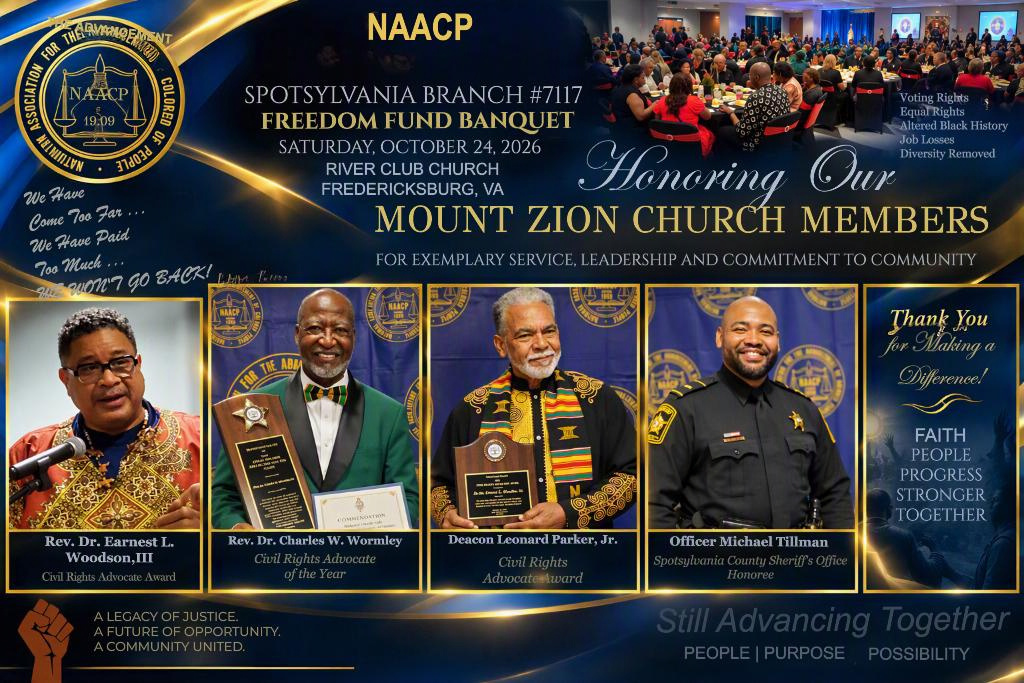
Mount Zion Baptist Church had much to celebrate at the NAACP Spotsylvania Branch #7117 Freedom Fund Banquet, held Saturday, October 24, 2026, at the River Club Church in Fredericksburg, Virginia.
Leading Mount Zion’s distinguished honorees was Rev. Dr. Charles W. Wormley, Pastor of Mount Zion Baptist Church, who was recognized as the 2026 NAACP Spotsylvania Branch #7117 Civil Rights Advocate of the Year. Pastor Wormley also received special recognition from Virginia State Delegate Joshua Cole, District 66, honoring his service and commitment to the community.
Mount Zion was further blessed to have two additional members recognized for their outstanding contributions: Rev. Dr. Earnest L. Woodson and Deacon Leonard Parker, Jr., both recipients of Civil Rights Advocate Awards.
What a proud moment for the Mount Zion family! We celebrate these faithful leaders whose service reaches beyond the walls of the church and continues to make a meaningful difference in the community.
Congratulations to our Mount Zion honorees. Your leadership, service, and commitment continue to let your light shine!
“Faith in Action. Leadership in Service. Making a Difference.”
Full Worship Service
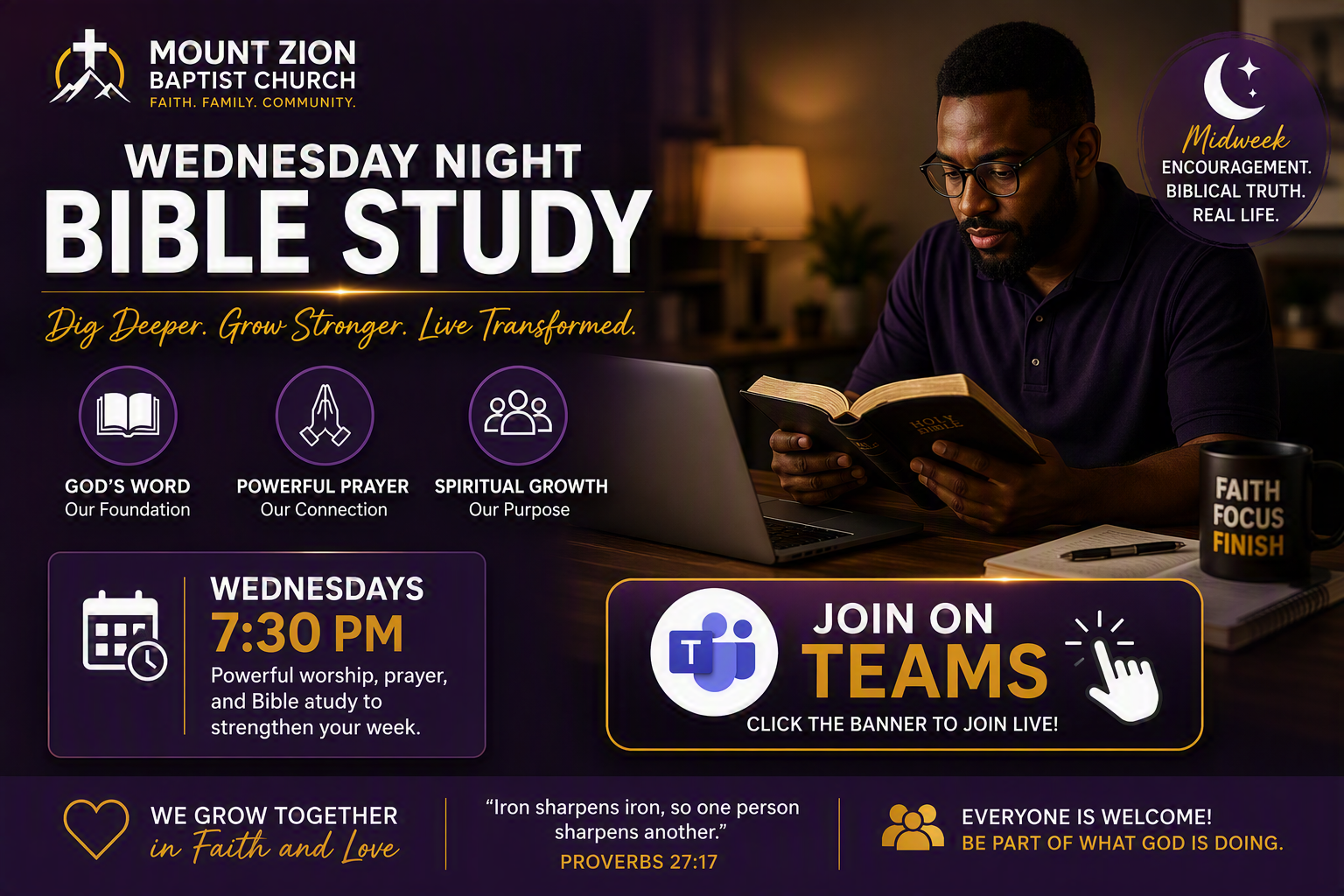
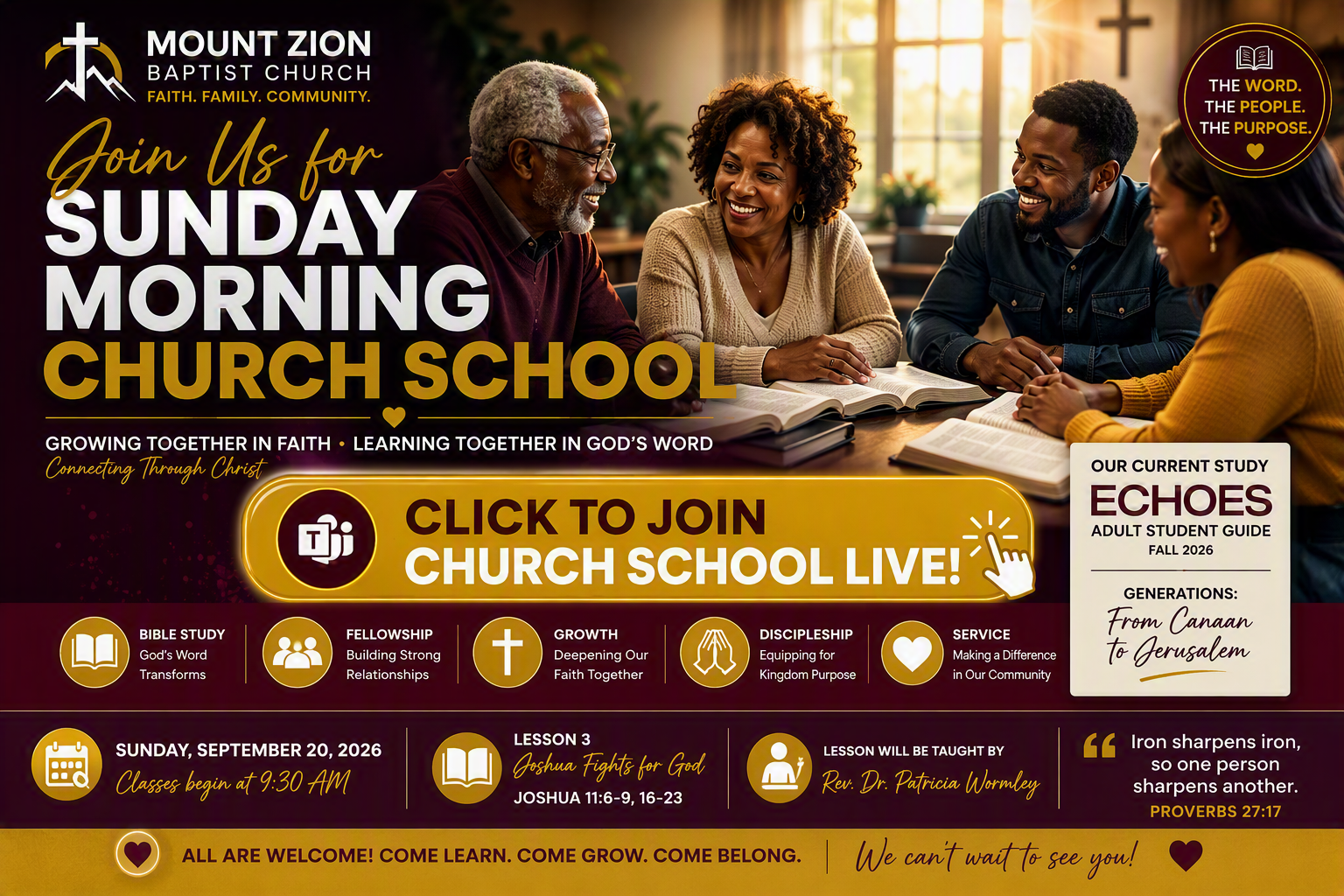
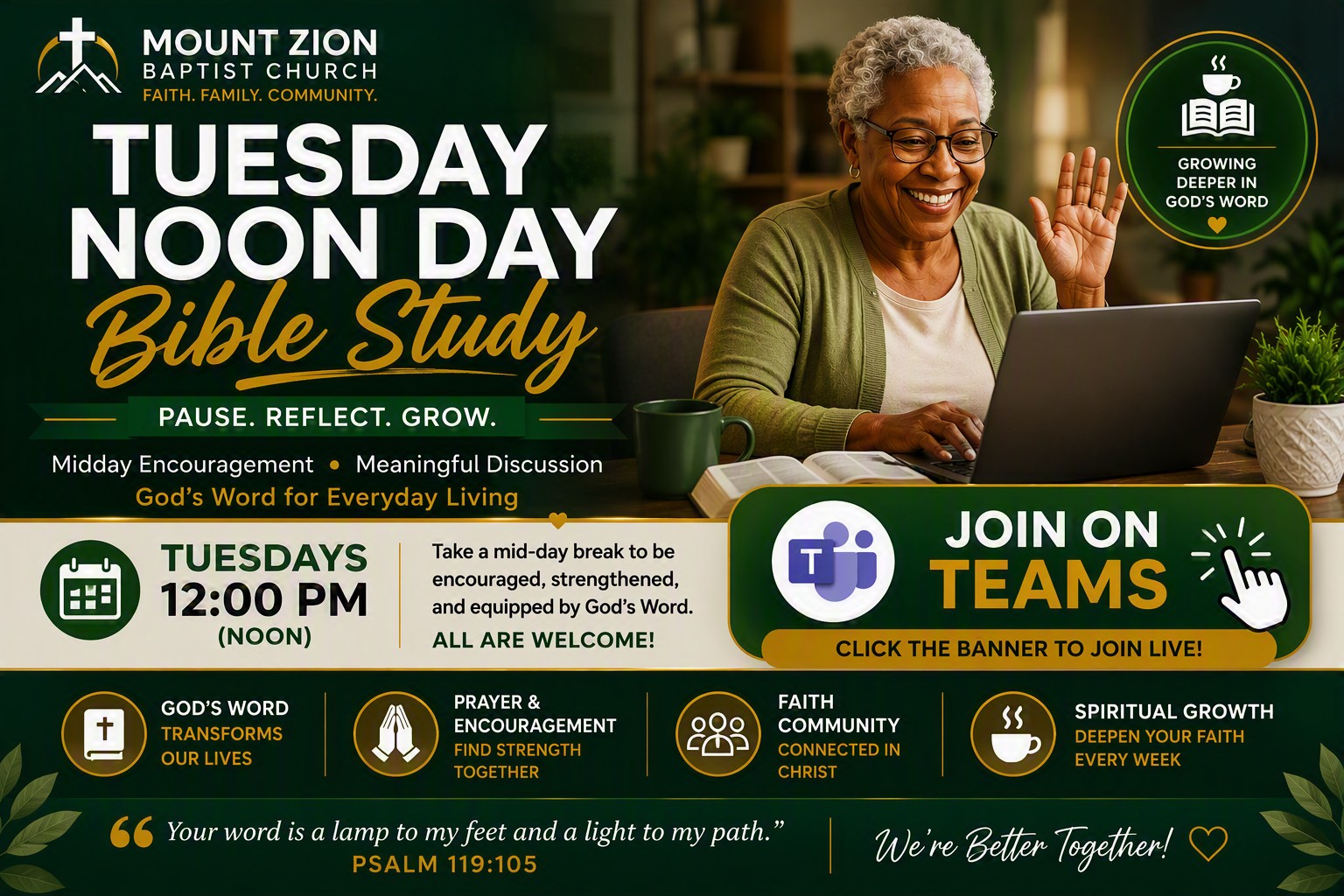
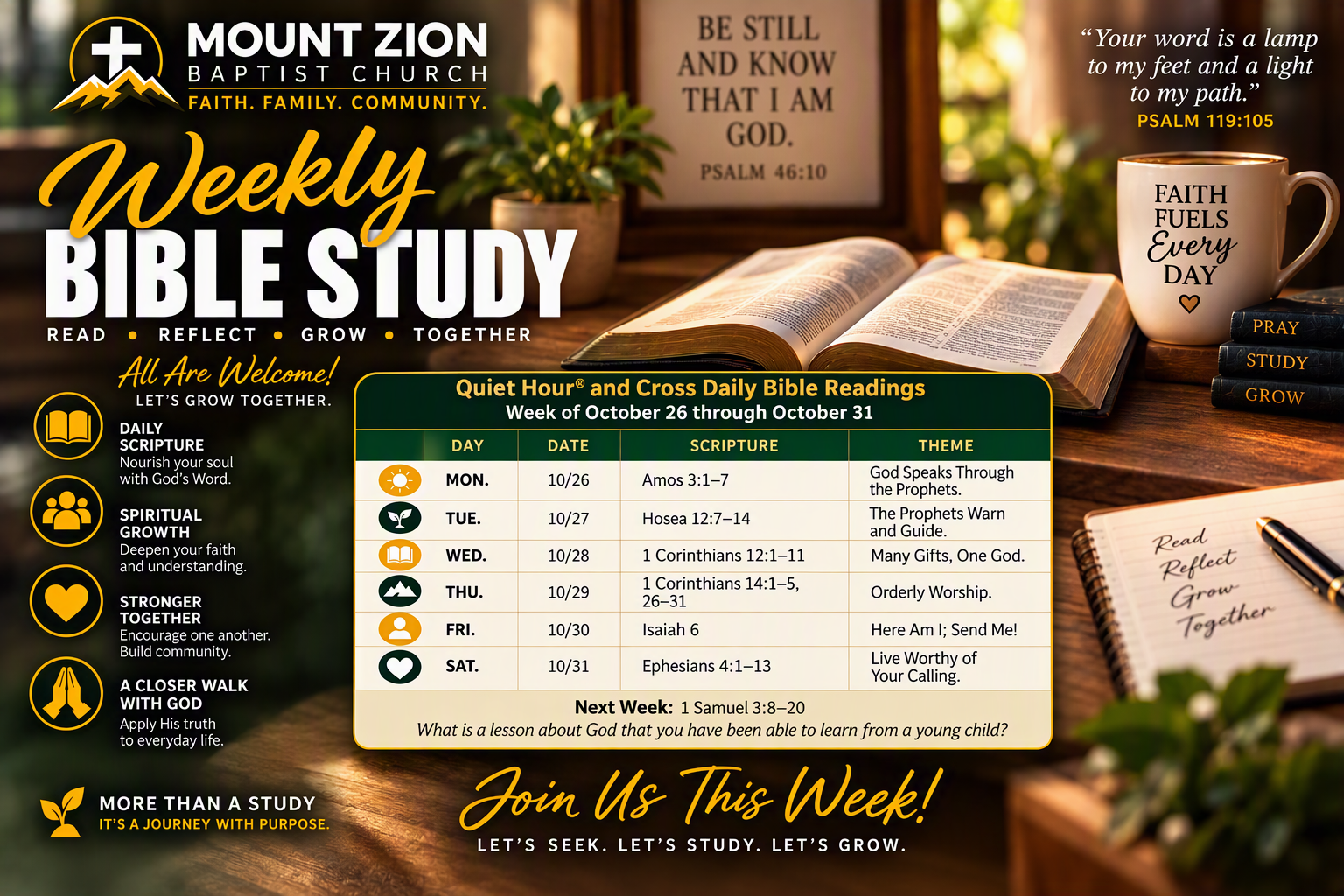 Join the Mount Zion Baptist Church family each week as we explore the life-changing truth of Scripture through interactive Bible Study sessions held on Tuesdays at 12:00 p.m. and Wednesdays at 7:30 p.m. These gatherings are designed to help strengthen your faith, deepen your understanding of God’s Word, and provide practical guidance for daily living. Whether you are new to Bible study or have walked with Christ for years, you will find encouragement, spiritual growth, and meaningful fellowship as we learn, pray, and grow together. All are welcome to join us as we discover God's promises and apply His truth to our lives.
"Your word is a lamp to my feet and a light to my path." Psalm 119:105.
What does a generous heart reveal about our faith? This Sunday’s inspiring message, “Your Generosity Is Showing Again,” drawn from Philippians 4:10–20, reminds us of the joy, gratitude, and blessing found in faithful generosity.
Were you unable to join us, or would you simply like to experience the message again? Watch the Full Worship Service, enjoy the Sermon Message, or watch both! We pray your heart will be encouraged and your faith strengthened.
▶ Watch the Sermon Message
▶ Watch the Full Worship Service
Video Ministry Record provided by Sister Ruby Blackwell
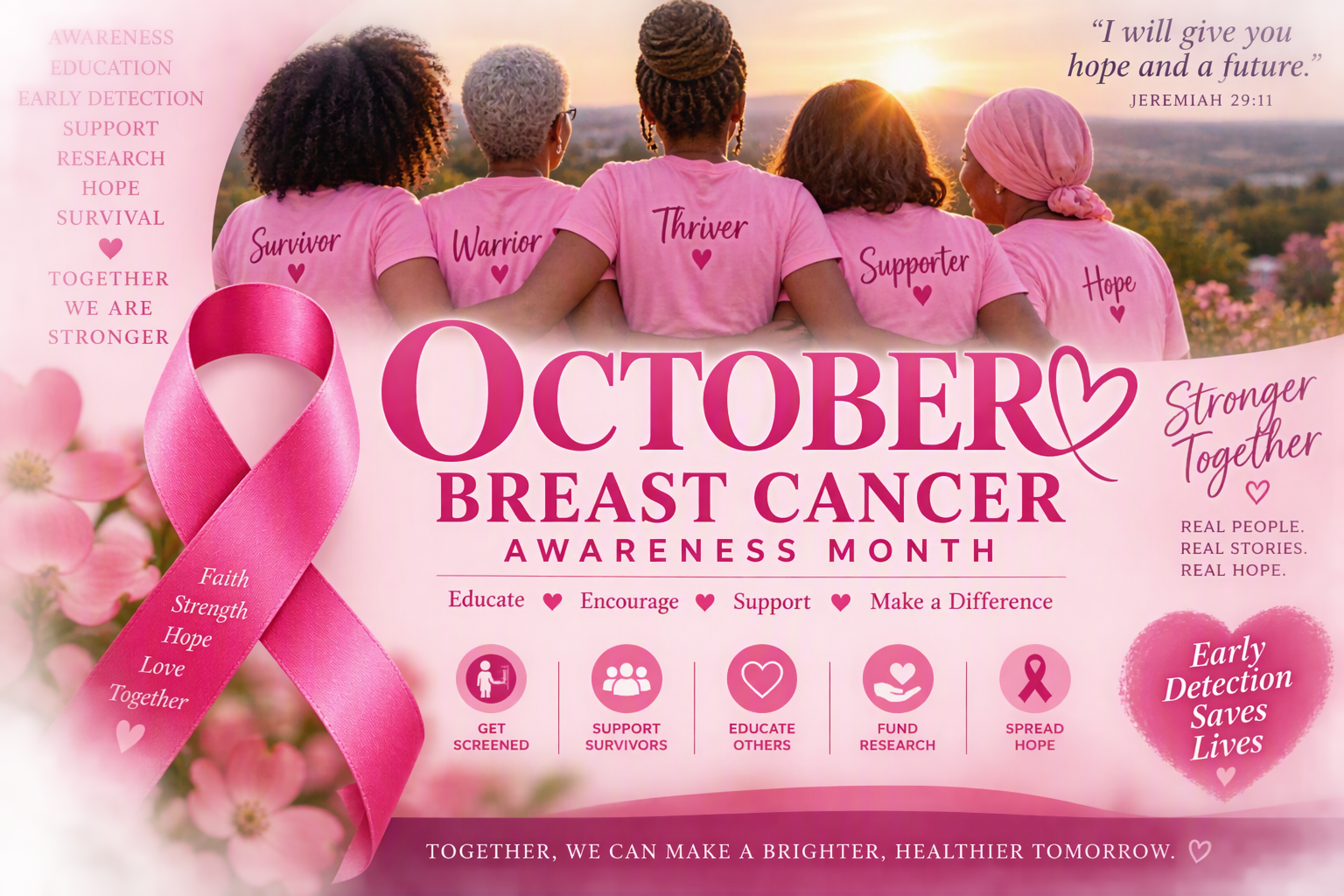 Each October, communities across the nation recognize Breast Cancer Awareness Month, a time dedicated to increasing awareness about a disease that affects millions of individuals and families. Breast cancer touches the lives of people of all ages, backgrounds, and communities, often bringing physical, emotional, and financial challenges. While significant progress has been made in detection and treatment, the importance of education, regular screenings, and early detection remains critical. Awareness empowers individuals to learn the risk factors, recognize warning signs, and take proactive steps toward better health.
Breast Cancer Awareness Month is also a reminder of the power of compassion and support. Many survivors, patients, caregivers, and families face difficult journeys that require encouragement, prayer, understanding, and practical assistance. Communities, churches, and organizations can make a lasting impact by promoting health education, supporting screening initiatives, raising funds for research, and standing alongside those affected by the disease. Together, we can foster hope, inspire action, and remind those facing breast cancer that they are never alone. By increasing awareness and supporting one another, we help build stronger, healthier communities for generations to come. 💗🎀
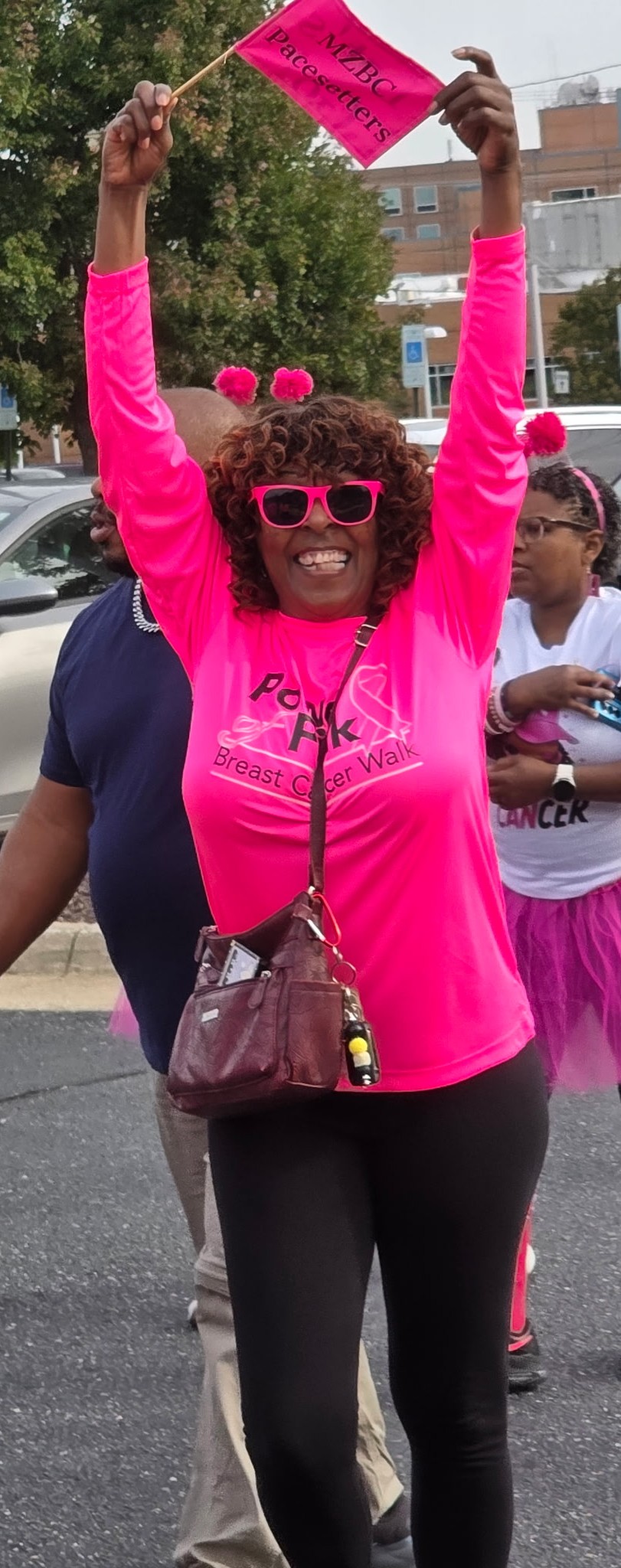
MZBC Pink Pacesetters Tie for First Place at the Power of Pink Breast Cancer Walk
The Mount Zion Baptist Church Pink Pacesetters proudly stepped out in faith, fellowship, and support for a worthy cause during the recent Power of Pink Breast Cancer Walk benefiting breast cancer awareness and support initiatives. We are excited to share that the MZBC Pink Pacesetters were recognized as one of the Largest Group Winners, tying for first place with the largest number of participants at the Power of Pink Breast Cancer Walk. representing an organization at this year's event!
This annual walk serves as an important reminder of the ongoing fight against breast cancer, raising awareness, inspiring hope, and supporting individuals and families affected by the disease. Through their enthusiastic participation, the Pink Pacesetters demonstrated Mount Zion's commitment to community service, health awareness, and standing alongside those impacted by breast cancer.
We invite you to enjoy photos from this inspiring event, featuring our enthusiastic walkers proudly representing Mount Zion, memorable moments along the walk route, and our award recognizing the Pink Pacesetters for tying for the largest group participation and being named a 2026 Largest Group Winner. The vibrant sea of pink, community spirit, and shared commitment to finding a cure made for a truly memorable day.
Congratulations to the MZBC Pink Pacesetters for representing Mount Zion Baptist Church with excellence and helping make a difference, one step at a time! 💗🎀
Today's Sermon Message - 10/11/26
Today's Worship Service - 10/11/26
Video Ministry Video provided by Church School Superintendent Brother Robert Lucas
Sermon Message
Worship Service
Video Ministry Recording provided by Church School Superintendent Brother Robert Lucas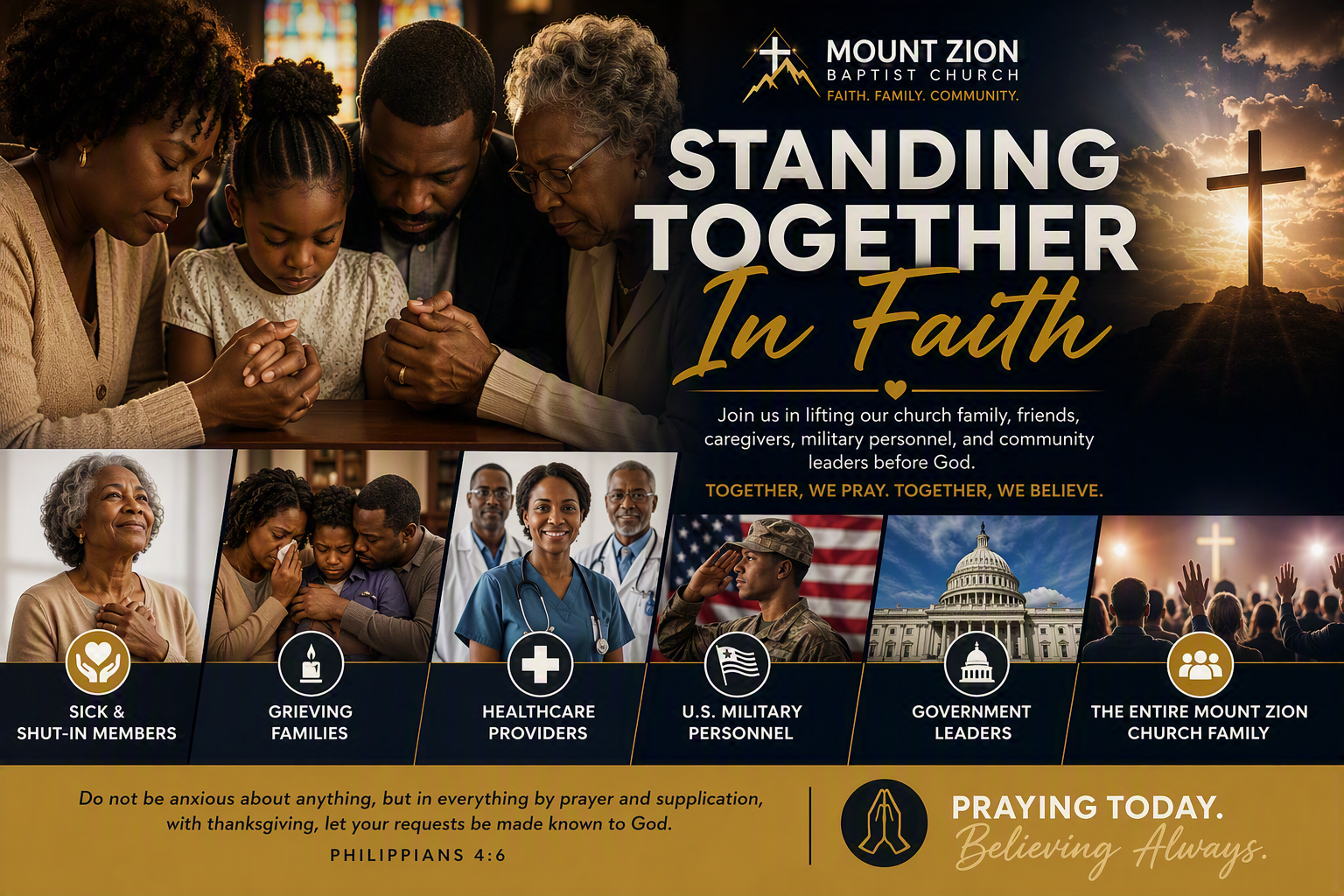
Please pray for Sis Lynn Beckett, Rev. Frank & Gloria Brooks and Family, Sis. Rosa Burton, Bro. William Carrington, Sis. Annette Carter, Sis. Earline Carter, Bro. Leo Chapman, Sis Sheila Cofield, Sis. Teonia Copeland, Master Torin Craig, Tristen Craig, Bro. Harold Ferguson, Sis. Cheryl Figgatt, Bro. George Ford, Sis Camille Giles, Health Care Providers, Mr. Jaime Harrison, The Hill Family, Sis. Dorothea Hill, Bro. Cliff Holmes, Sis. Mary Jones, Bro. Christian Johnson, Sis Tamara Johnson, Sis. Shaquan Kabila, Trustee Vikki Lewis, Sis. Bea Mack, Bro. Lynwood Maye, Bro. Atrell Maye, Sis. Barbara McCoy, Bro. Frederick McGuire, Mount Zion Baptist Church Family, National, State and Local Government, Bro. John Thomas Reese Jr., Bro. Dwight Renshaw, Bro. Anthony Sanders, Min. Martha Shuler Holmes, Sis Autumn Small, Sis Kailyn Small, Sis Olivia Small, Sis. Arlene Wallace, Sis Grace Short, Bro. Jason Small, Bro. Clarence Smith, Bro. Cornell Strother, Bro. Jarrold Swan, U.S. Soldiers, The Watson Family, Bro. Kenneth Whitaker, Sis. Martha Jones Wilkinson, Sis. Mary Wiggin, Rev. Dr. Charles W. Wormley and Family, Bro. Vernon Wormley.
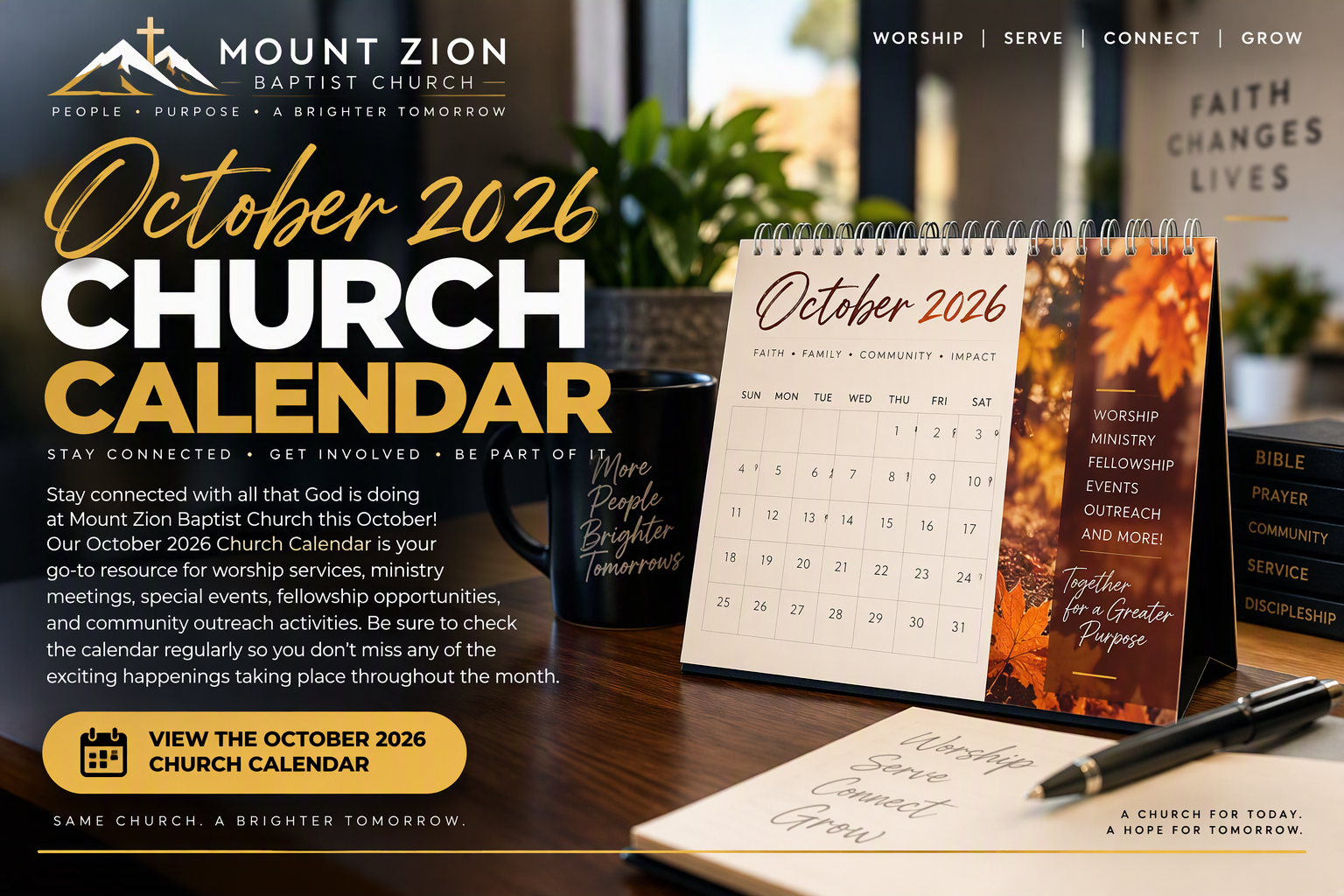
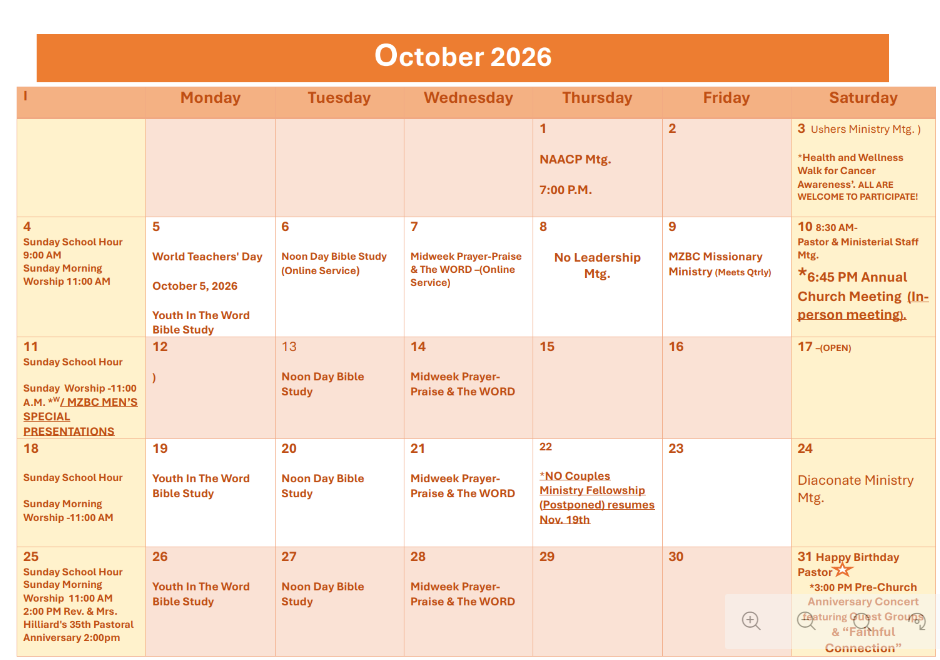
Don't miss the latest updates, inspiring revivals, and exciting community events. Check out our Community section regularly to stay informed, encouraged, and connected.


 Live Steaming

 Groups
